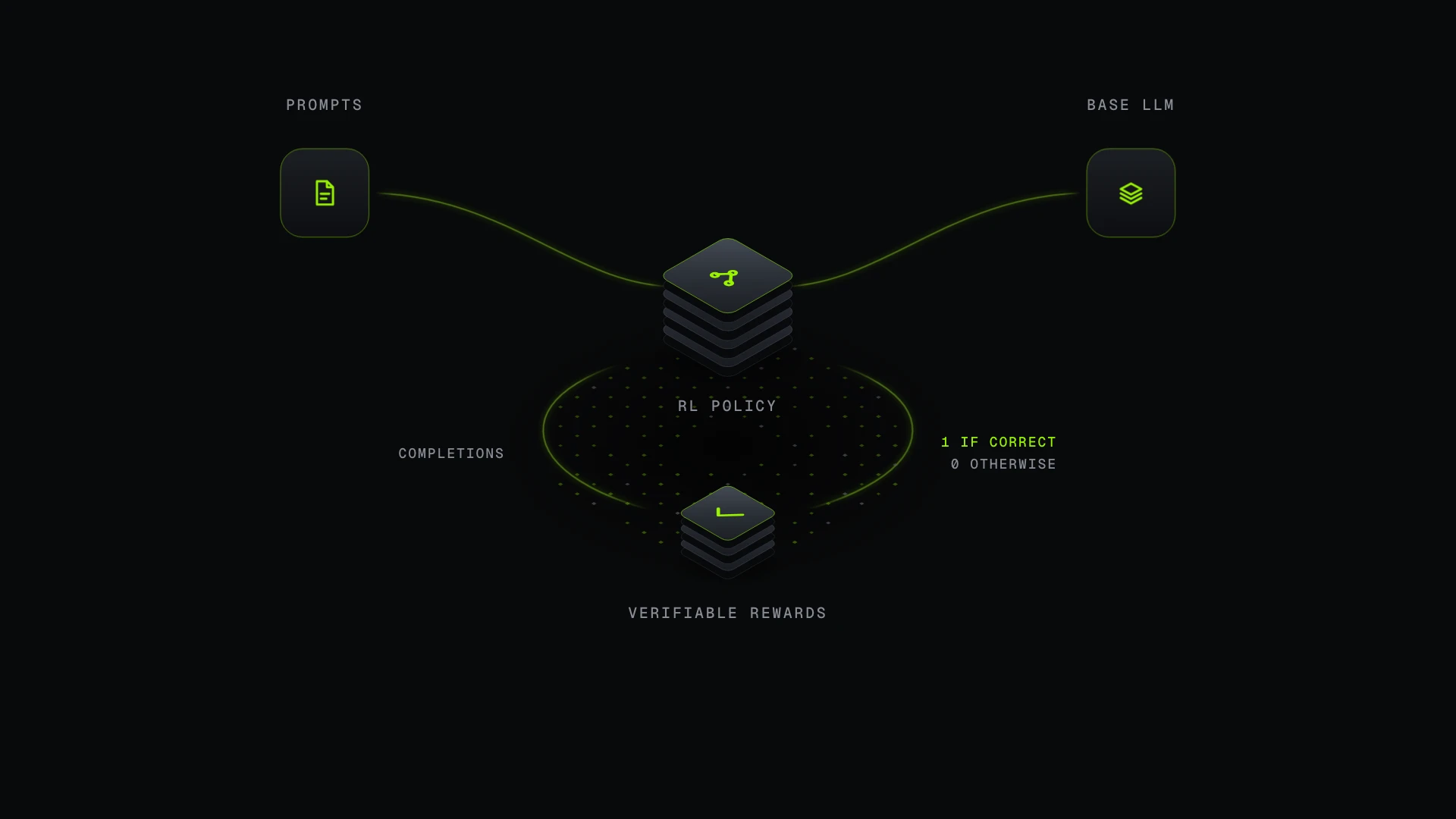
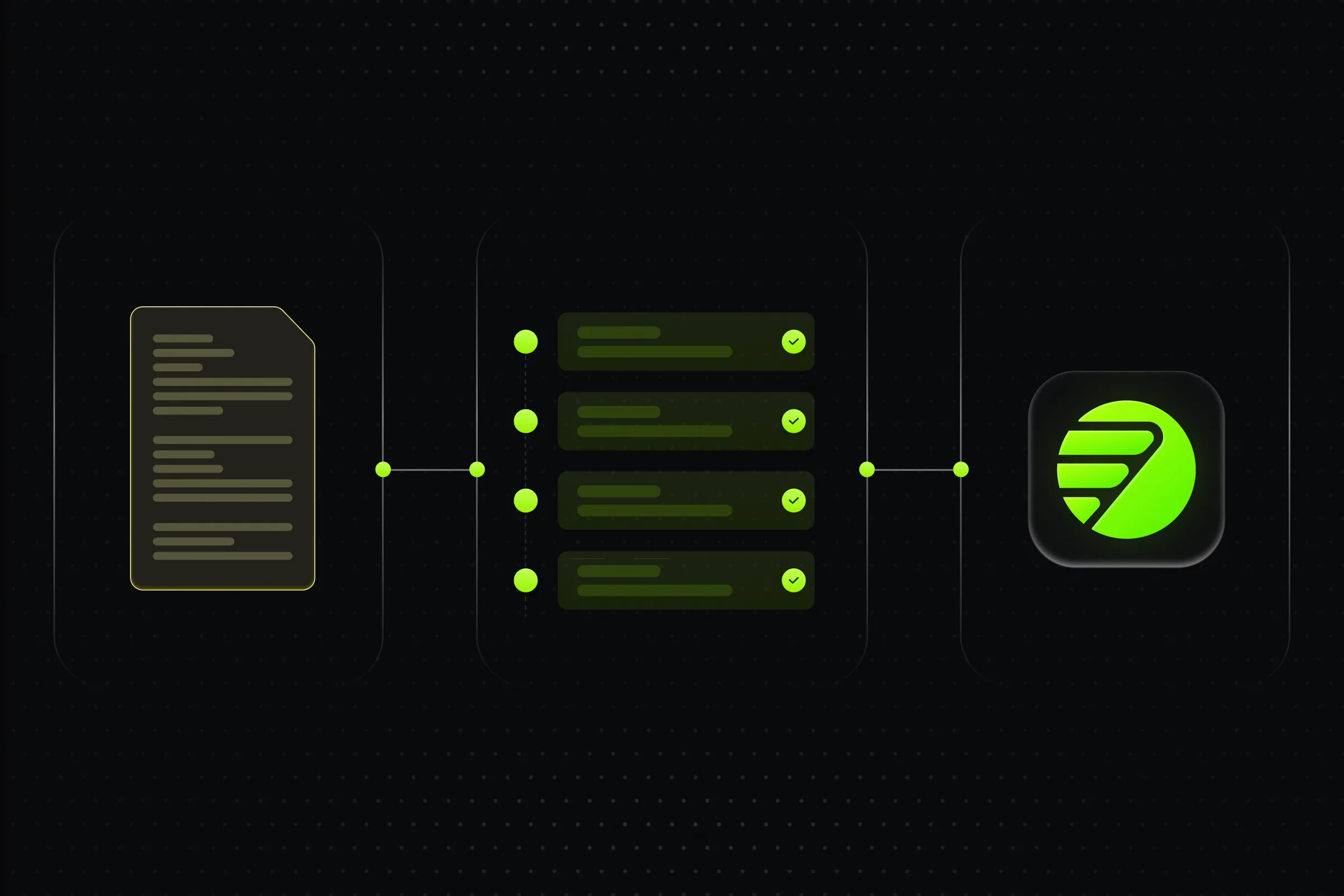
General models can review legal documents. It becomes problematic when the same process has to run thousands of times: the bill grows quickly, and the model may be too slow for a large batch. Post-training takes a smaller model and teaches it that one job.
How much can that change? On a public legal-agent benchmark updated in October 2026, a trained small model scored 19.17%. A leading general model scored 19.58%. For almost identical result post-trained model was more than 70 times cheaper comparing to frontier one: $0.15 against $10.55 per task.
One question at a time
Post-training needs a question the team can mark the same way every time. Three examples:
- Does this contract support, contradict, or omit a specific legal statement?
- Which category does this court document belong in?
- What charges, evidence, and sentence does this court decision record?
Each case requires training dedicated model with different examples and tests.
If your team has a repeated decision like these, a post-training assessment can test whether it is worth training.
Contract questions
A contract check needs a question with a clear answer. One example is:
Do any obligations in this agreement survive termination?
The answer may be yes, no, or not mentioned. It should also point the lawyer to the contract language that supports the answer.
An October 2026 study from Leiden University tested this kind of review. Researchers trained a model on contracts where the correct answers were already marked. They then tested it on 123 contracts it had not seen before, covering 2,091 contract questions.
The post-trained model was more accurate on the job it had learned and scored 86.9% accuracy against 81.2% for the best general model. Training for the specific task added 5.7 percentage points.
Sorting court documents
Sorting asks for one label from a known list. Older court documents that reviewers have already labeled provide the examples.
In a May 2026 paper at the IEEE Conference on Artificial Intelligence, Renato Miyaji, Renato Moulin, and Leonardo Machado trained a 4-billion-parameter model to sort Brazilian lawsuit documents. It scored 91 out of 100. The best general model in the test scored 77.
The score counts a wrong label and a missed document. The practice showed that a small model cost less and was fast enough for batch work, while the general models were too slow.
Extracting facts from court decisions
A model can extract court decisions as fixed fields, such as the charge, evidence, and sentence. Past decisions marked by researchers are used as the training examples.
An April 2026 study published by the Association for Computational Linguistics trained a 14-billion-parameter model to extract 47 fields from Brazilian criminal decisions. Fine-tuning raised its accuracy from 74.7% to 92.8%.
The model processed 454 decisions in four hours at an estimated €0.77 per 1,000 cases. It cost 45% less than the compared frontier model, with almost identical accuracy.
What the model trains against
Suppose the team chooses the defined-term check. A lawyer marks the sentence, the definition it conflicts with, or “no issue.” Those marks become the examples.
The AI team then writes a check that scores the model’s answer:
- The right sentence and the right explanation pass.
- The right sentence with the wrong explanation gets partial credit.
- A confident explanation of the wrong clause fails.
- A clean agreement must come back with no flag.
The team keeps some agreements out of training. Hookshot™ Models uses them to compare the trained model with its starting model and a general model.
A higher score is not enough if the model invents more problems in clean documents. In that case, keep the previous model. If there is no measurable improvement, do not ship the new one.
After a model passes, Hookshot™ Models serves it for that check. The documents do not go to the company behind a general model. The firm decides who can send a document and can restore the previous model if the results drift.
When to train
Post-training is worth testing when the same decision runs across a large batch and lawyers can mark the right answer consistently. The team also needs enough past decisions to train the model without using the documents reserved for testing.
After the job reaches expected bar, compare the trained model with the general model already in use. Measure cost and speed, how many real issues it misses, and how many clean documents it flags by mistake. Those last two numbers matter separately. A model can catch every real issue by flagging half the documents it reviews, but lawyers would still have to read too many with no issue.
Hookshot™ Models is a serverless post-training platform that lets software engineers build models without a dedicated machine-learning team. Your team defines the training and test data, and Hookshot returns a model you can deploy on dedicated infrastructure, as a serverless endpoint, or on-premises.